무엇을 찾고 계신가요?
Selecting the correct exhaust wrap material is critical for effective heat management, durability, and long-term system performance. Among the most commonly used solutions, titanium exhaust wrap and fiberglass exhaust wrap serve different operating ranges and application requirements.
This comparison explains the practical differences between the two materials from a thermal, mechanical, and application standpoint, helping engineers, fabricators, and performance builders make informed decisions.
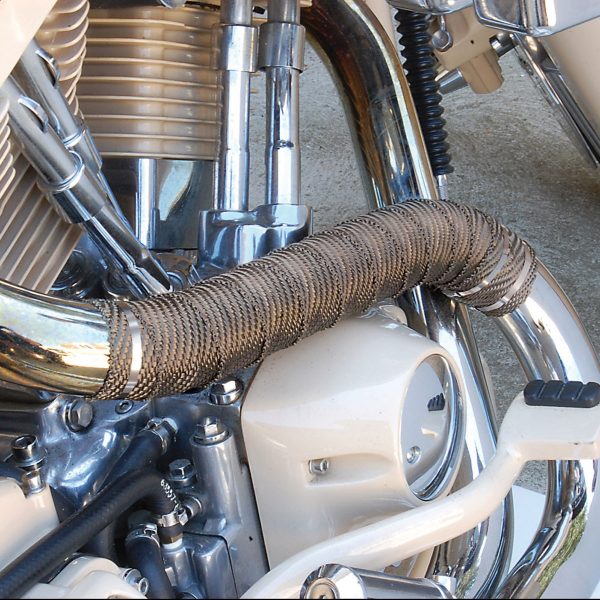
Fiberglass exhaust wrap is traditionally manufactured from E-glass or similar glass fibers. It offers basic thermal insulation and is widely used in moderate-temperature exhaust applications due to its low cost and ease of installation.
Titanium exhaust wrap, despite the name, is not made from metallic titanium. Instead, it is produced from advanced mineral-based fibers—often derived from basalt or lava rock—engineered to withstand significantly higher temperatures and more aggressive thermal cycling.
The difference in base fiber chemistry directly impacts heat resistance, durability, and service life.
Fiberglass exhaust wrap performs adequately in applications where exhaust temperatures remain relatively stable and within moderate limits. However, under sustained high heat or rapid temperature fluctuations, fiberglass fibers can become brittle, leading to insulation breakdown and reduced effectiveness.
In these conditions, titanium exhaust wrap functions as a reliable form of high-temperature exhaust insulation , maintaining stable performance where conventional materials begin to degrade. Its fiber structure maintains integrity under higher continuous temperatures and repeated heating and cooling cycles. This stability makes it better suited for turbocharged engines, performance motorcycles, and racing exhaust systems where heat loads are consistently elevated.
Exhaust systems experience vibration, thermal expansion, moisture exposure, and mechanical stress. Over time, these factors accelerate material fatigue.
Fiberglass exhaust wrap tends to degrade faster under vibration and heat cycling. Fiber shedding, surface cracking, and reduced insulation density are common after prolonged use.
Titanium exhaust wrap offers improved resistance to these stressors. The denser weave and higher-grade fiber composition reduce fraying, slow material fatigue, and maintain insulation performance over a longer service interval.
Both materials are flexible and can conform to straight pipes, bends, and tight exhaust geometries. Fiberglass wrap is generally easier to handle due to its softer fiber structure, but it often releases airborne fibers during installation, requiring protective equipment.
Titanium exhaust wrap is slightly stiffer, which improves its ability to hold shape during wrapping. Pre-wetting during installation is recommended to enhance conformity and minimize fiber irritation. Once installed, titanium wrap tends to retain its structure better over time.
Fiberglass exhaust wrap is commonly used in:
Standard motorcycle exhaust systems
Naturally aspirated engines
Low to moderate temperature exhaust routing
Titanium exhaust wrap is preferred for:
Turbocharger and downpipe insulation
High-performance motorcycle exhausts
Racing and track vehicles
Off-road and powersports applications
Exhaust systems exposed to continuous high thermal load
Choosing the correct material depends not only on peak temperature, but also on heat cycling frequency and operating duration.
While fiberglass exhaust wrap typically has a lower initial cost, its shorter service life in high-temperature environments can result in more frequent replacement.
Titanium exhaust wrap generally offers a longer operational lifespan when installed correctly. In demanding applications, this improved durability can offset the higher upfront cost by reducing maintenance intervals and downtime.
Fiberglass exhaust wrap remains a practical solution for standard exhaust insulation where temperatures and duty cycles are moderate.
Titanium exhaust wrap is the better choice for applications that demand higher heat resistance, improved durability, and long-term performance stability. It is particularly well suited for performance-oriented exhaust systems where consistent thermal control is critical.
For a detailed overview of material structure, thermal performance, and installation practices, refer to our Titanium Exhaust Wrap technical page for professional exhaust heat management solutions.

No.10, Chuangxin North Road, Nanshan Park, Ningguo Economic and Technological Development Zone, Ningguo City, Anhui Province, China
전화/Whatsapp : 0086-15856303740
Skype : vanesa-cheng