무엇을 찾고 계신가요?
배기열 단열 배기 시스템은 현대 자동차, 산업 및 발전 시스템에서 매우 중요한 역할을 합니다. 배기 부품은 극도로 높은 온도에서 작동하기 때문에 제어되지 않은 열 손실은 안전 위험, 효율 저하 및 장비의 조기 고장을 초래할 수 있습니다. 효과적인 배기 열 절연은 열이 있어야 할 곳, 즉 배기 시스템 내부에 열을 유지하는 데 도움이 되며 주변 부품과 작업자를 보호합니다.
이 가이드에서는 설명합니다 배기열 단열이란 무엇이며, 왜 중요한지, 가장 일반적인 단열 방법 및 모범 사례에 대해 알아보겠습니다. 다양한 용도에 맞는 최적의 솔루션을 선택하기 위해서입니다.
배기열 단열은 다음을 사용하는 것을 의미합니다. 고온 절연 재료 배기 파이프, 매니폴드, 터보차저, 소음기 등의 배기 부품에서 발생하는 열 전달을 줄이기 위해서입니다. 이러한 부품들은 종종 수온이 특정 범위에 도달합니다. 500°C ~ 1000°C (932°F ~ 1832°F) 작동 중.
적절한 단열이 없으면 복사열은 다음과 같은 문제를 일으킬 수 있습니다.
주변 장비 손상
화재 위험을 초래합니다
주변 온도 상승
전체 시스템 효율을 감소시킵니다.
배기열 단열은 다음과 같은 문제들을 해결합니다. 열을 포함하는 표면 온도를 낮추고 열 제어를 개선합니다.
배기 시스템 내부에 열을 유지하면 가스 흐름 속도가 향상됩니다. 엔진과 터빈에서 이는 다음과 같은 결과를 가져옵니다. 더 나은 성능과 에너지 효율 특히 터보차저 엔진의 경우 더욱 그렇습니다.
단열되지 않은 배기구 표면은 심각한 화상 위험을 초래합니다. 적절한 배기구 단열은 표면 온도를 낮출 수 있습니다. 50~90% 이는 직장 안전을 크게 향상시킵니다.
과도한 복사열은 배선, 밀봉재, 호스 및 전자 부품을 손상시킵니다. 절연재는 이러한 민감한 부품을 보호하고 장비의 수명을 연장합니다.
산업 및 해양 환경에서 제어되지 않은 배기열은 가연성 물질에 불을 붙일 수 있습니다. 단열재는 이러한 문제를 해결하는 데 매우 중요합니다. 화재 예방 장벽 .
배기 시스템을 단열하는 데에는 여러 가지 방법이 사용됩니다. 각 방법에는 장점과 한계점이 있습니다.
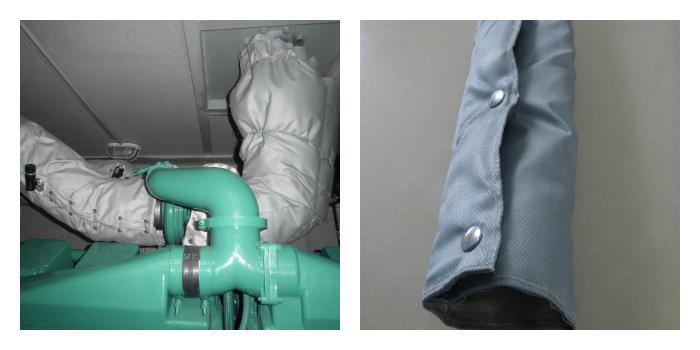
안 배기 단열 블랭킷 이 제품은 배기 부품을 감싸도록 설계된 탈착식 다층 단열 커버입니다. 다음과 같은 특징을 제공합니다.
높은 단열 효율
간편한 설치 및 제거
극한 온도에서도 탁월한 성능을 발휘합니다.

No.10, Chuangxin North Road, Nanshan Park, Ningguo Economic and Technological Development Zone, Ningguo City, Anhui Province, China
전화/Whatsapp : 0086-15856303740
Skype : vanesa-cheng