무엇을 찾고 계신가요?
흡음형 소음기 내부에서 천공 코어는 음향 시스템의 일부일 뿐입니다. 코어를 둘러싸고 있는 재질은 배기 소음, 음질, 열 안정성, 패킹 수명 및 소음기의 장기적인 상태에 직접적인 영향을 미칩니다.
그 물질은 일반적으로 다음과 같이 알려져 있습니다.머플러 패킹.
배기 시스템 설계 및 시장에 따라 동일한 부품이 다음과 같이 불릴 수도 있습니다.머플러 패킹 재료,배기 머플러 패킹소음기 패킹, 배기 패킹 재료, 방음 충전재, 소음기 울 또는 배기 감쇠 재료.
BSTFLEX는 오토바이 소음기, 자동차 배기 시스템, 레이싱 머플러, 산업용 소음기, 발전기 및 기타 배기 장치용 고온 패킹 재료를 공급하고 개발합니다.
전체 제품군을 살펴보세요머플러 패킹 재료.
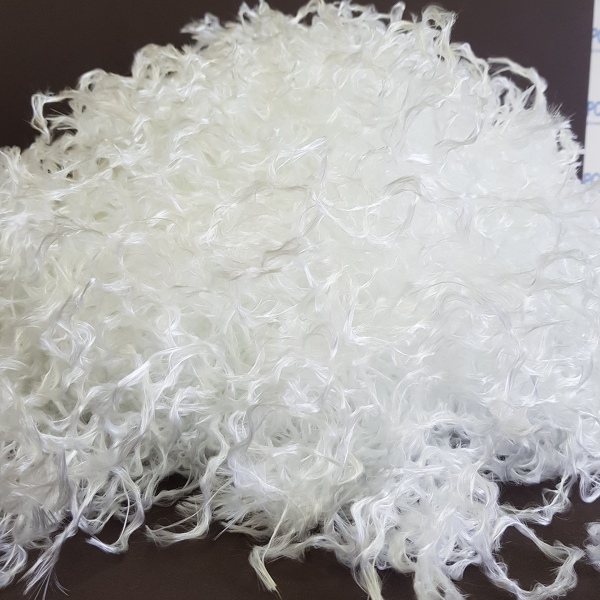
일반적인 흡음 소음기는 비교적 간단한 구조를 기반으로 제작됩니다.
배기가스 흐름 → 천공 튜브 → 보호 섬유층 → 방음재 → 외피
배기가스는 천공된 코어를 통과합니다. 음향 에너지는 천공을 통해 주변의 섬유질 소재로 전달됩니다.
단순히 챔버나 제한적인 배플에만 의존하는 대신, 이 패킹은 섬유 구조 내부의 마찰을 통해 음향 에너지의 일부를 아주 미미한 양의 열로 변환합니다.
시스템이 계속 작동하려면 포장 상태가 유지되어야 합니다.
열적으로 안정한,
충분히 회복력이 있는,
배기가스 맥동 침식에 대한 저항성
핵심부를 중심으로 정확하게 포장됨,
또한 반복적인 가열 및 냉각 후에도 섬유 구조를 유지할 수 있습니다.
그렇기 때문에 온도 등급만을 기준으로 배기 머플러 패킹 재료를 선택하는 것은 충분하지 않은 경우가 많습니다.
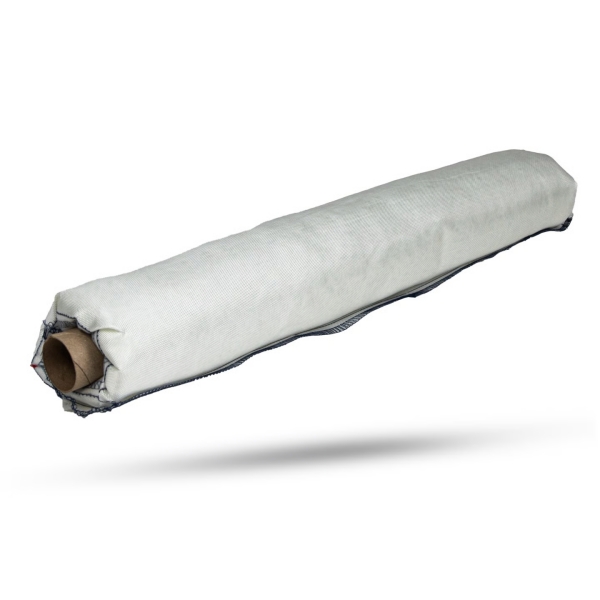
머플러 패킹은 여러 가지 역할을 동시에 수행합니다.
개방형 섬유 구조는 배기 가스 맥동으로 발생하는 음향 에너지를 흡수합니다. 이는 특히 가스 흐름이 천공된 중앙 튜브를 통과하는 직관형 및 고성능 소음기에서 중요합니다.
차량 내부 포장 상태는 음압뿐만 아니라 배기음에도 영향을 미칠 수 있습니다.
새 흡음재는 일반적으로 더 부드럽고 금속성 소음이 적은 배기음을 냅니다. 흡음재 섬유가 열화되거나, 압축되거나, 이동하거나, 사라지면 소음기의 배기음이 눈에 띄게 날카로워지고 커질 수 있습니다.
패킹층은 뜨거운 천공 튜브와 소음기 케이스 사이에 분리막을 형성합니다.
머플러 패킹은 주로 방음재이지만, 열적 특성으로 인해 케이스 온도와 인접 부품의 내구성에 영향을 미칩니다.
안정적인 패킹은 외부 쉘에 가해지는 직접적인 음향 및 열 부하를 줄여줍니다. 잘 설계된 패킹 시스템은 머플러 내부의 진동으로 인한 열화도 줄일 수 있습니다.
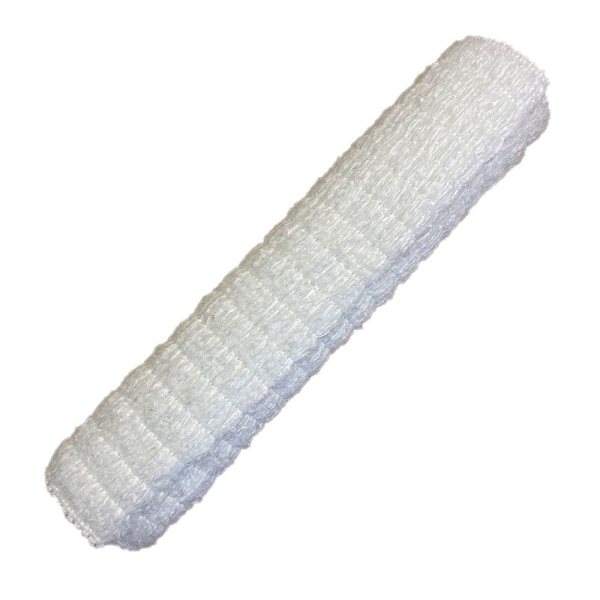
모든 배기 시스템에 이상적인 단 하나의 머플러 패킹 재료는 없습니다.
온도, 가스 속도, 엔진 유형, 예상 서비스 주기, 소음 목표, 소음기 형상 및 제조 방법은 모두 재료 선택에 영향을 미칩니다.
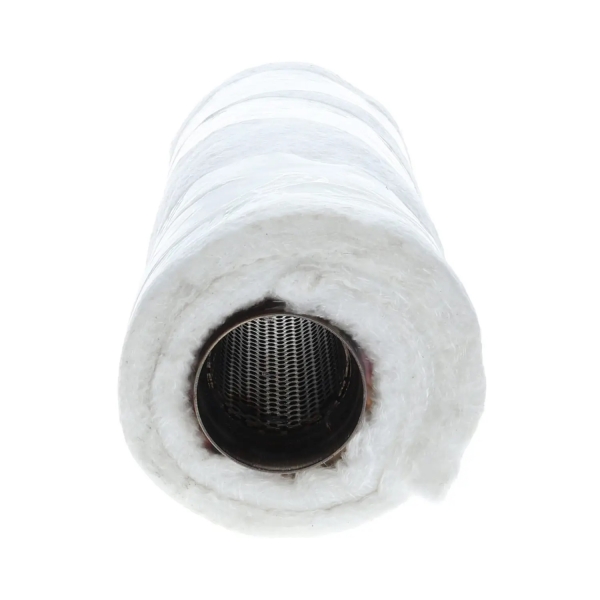
유리섬유는 흡음 소음기에 가장 널리 사용되는 재료 중 하나로 남아 있습니다.
이 소재는 낮은 부피 밀도와 넓은 섬유 표면적을 결합하여 과도한 무게 증가 없이 우수한 음향 흡수성을 제공합니다.
일반적인 형태는 다음과 같습니다.
느슨한 유리섬유 실,
연속 필라멘트 유리 섬유,
질감이 있는 유리 섬유,
유리섬유 매트,
유리섬유 포장용 베개,
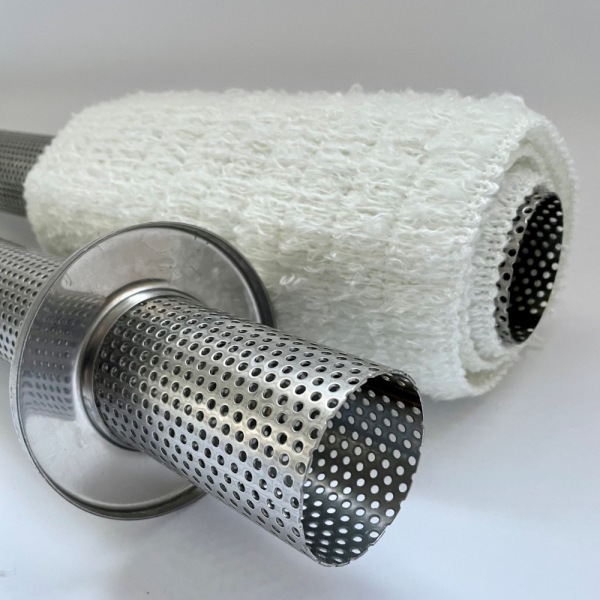
미리 성형된 포장 양말,
그리고 유리섬유는 직조된 유리 그물망 자루 안에 들어 있습니다.
BSTFLEX는 제조합니다.유리섬유 머플러 패킹 양말 (유리섬유 메쉬 백 포함)느슨한 패킹보다 제어된 설치 및 광섬유 고정이 요구되는 애플리케이션에 적합합니다.
유리섬유 패킹은 일반적으로 다음과 같은 경우에 선택됩니다.
오토바이 머플러,
ATV 및 UTV 소음기
자동차 고성능 배기 시스템,
교체용 소음기,
레이싱용 배기 시스템,
그리고 많은 OEM 흡음형 머플러가 있습니다.
이 제품의 가장 큰 장점은 음향 효율, 무게, 제조 용이성 및 비용 간의 균형입니다.
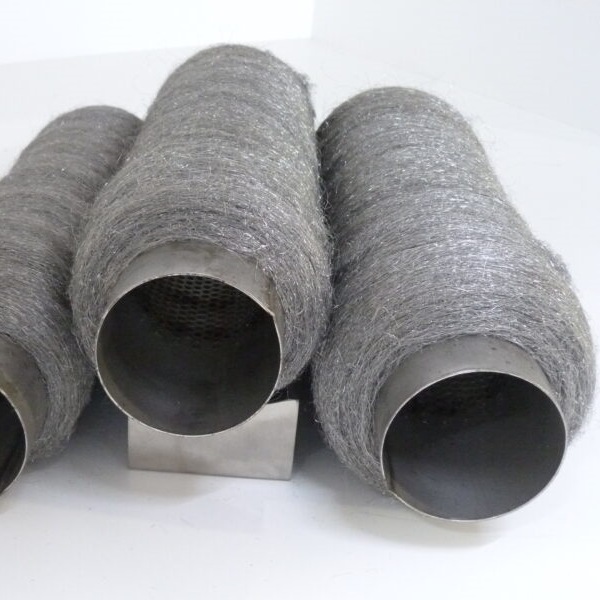
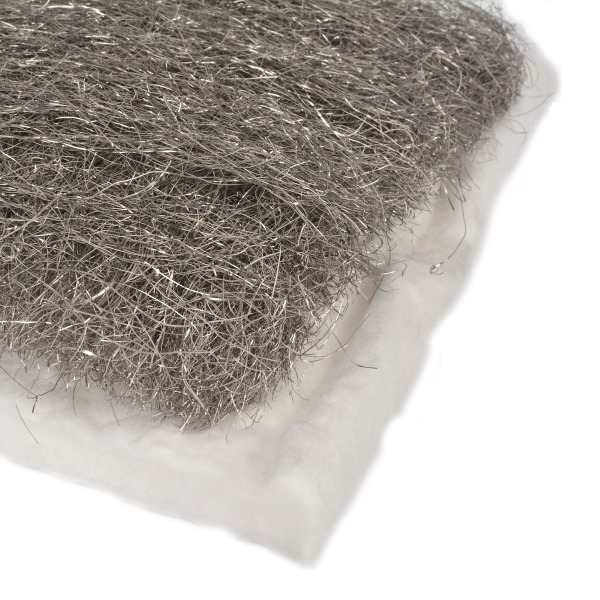
스테인리스 스틸 수세미는 다소 다른 기능을 합니다.
패킹 재료로 사용될 수도 있지만, 많은 고성능 배기 시스템에서는 보호층으로 천공 튜브 주위에 직접 설치됩니다.
일반적인 구성은 다음과 같습니다.
천공 코어 → 스테인리스 스틸 울 → 유리 섬유 패킹 → 머플러 케이스
스테인리스 스틸 층은 부드러운 음향 섬유를 다음과 같은 것으로부터 보호하는 데 도움이 됩니다.
매우 뜨거운 배기가스,
고속 펄스,
구멍 주변의 난류,
화염 노출,
그리고 점진적인 섬유 파열 현상.
이러한 구조는 특히 고성능 모터사이클, 레이싱카, 터보차저 및 고출력 배기 시스템에 유용합니다.
이러한 이유로 유리섬유와 스테인리스 스틸 섬유를 마치 한 가지 재료만 사용할 수 있는 것처럼 비교하는 것은 때때로 오해를 불러일으킬 수 있습니다. 많은 소음기에서 이 두 재료는 상호 보완적인 기능을 수행합니다.
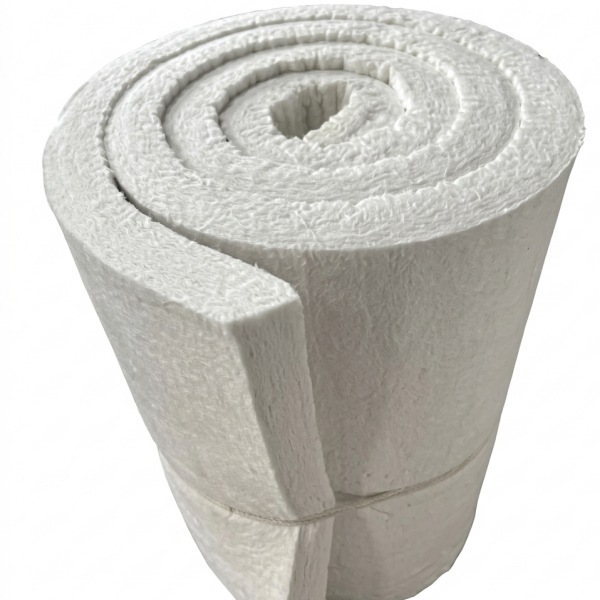
배기가스 온도가 비정상적으로 높은 경우에는 세라믹 섬유를 고려할 수 있습니다.
세라믹 섬유 소음기 패킹은 고온 내성과 비교적 낮은 열전도율 때문에 매력적인 소재입니다.
가능한 응용 분야는 다음과 같습니다.
high-temperature industrial silencers,
heavy-duty engine exhaust systems,
certain generator exhaust assemblies,
thermal-intensive exhaust equipment,
and special mufflers operating beyond the practical range of conventional glass fiber.
However, the highest temperature material is not automatically the best acoustic material.
Density, fiber diameter, resilience, vibration resistance, handling requirements, and long-term fiber stability must also be evaluated.
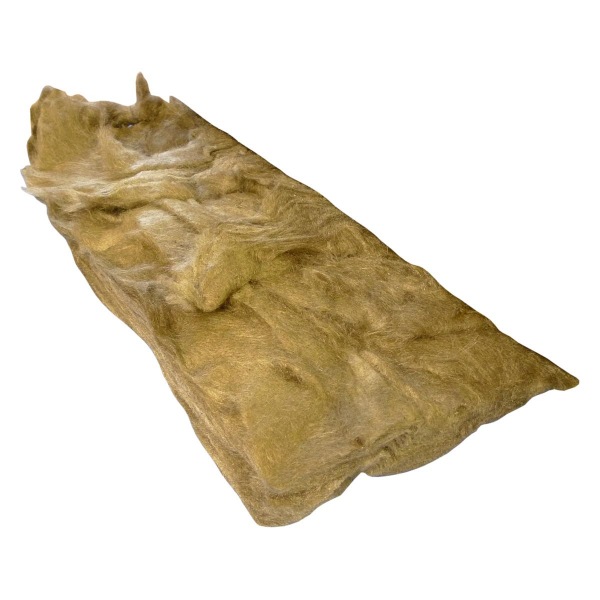
Basalt fiber provides another option between conventional glass fiber and more specialized high-temperature materials.
Produced from volcanic basalt rock, continuous basalt fibers can provide:
good thermal resistance,
mechanical stability,
chemical resistance,
vibration resistance,
and useful acoustic performance.
Basalt muffler packing can therefore be considered for automotive, motorcycle, heavy-duty, or industrial exhaust systems where designers want a mineral-fiber solution with elevated thermal capability.
| Packing Material | Primary Strength | Typical Position | Suitable Applications |
|---|---|---|---|
| Fiberglass | Efficient acoustic absorption | Main packing layer | Motorcycle, automotive, performance exhaust |
| Stainless Steel Wool | Heat and erosion protection | Around perforated core or as metallic packing | Racing, turbo, high gas velocity exhaust |
| Ceramic Fiber | Extreme-temperature capability | Main or supplementary insulation layer | Industrial and severe-temperature silencers |
| Basalt Fiber | Thermal and mechanical durability | Main acoustic packing layer | Heavy-duty, automotive and industrial exhaust |
The correct construction may combine two or more materials rather than using a single fiber throughout the silencer.
Two mufflers using exactly the same fiber can perform differently simply because the material was installed at different densities.
This is one of the most overlooked aspects of exhaust muffler packing.
If the fiber mass is insufficient, several problems can develop:
reduced acoustic absorption,
rapid fiber movement,
localized empty areas,
increased exhaust noise,
accelerated blowout.
The fibers may also redistribute under vibration and exhaust pulsation.
Over-compression creates another set of problems.
When fibrous material is compressed excessively, the void structure needed for acoustic energy dissipation changes.
The result can be:
poorer sound absorption in certain frequency ranges,
increased silencer weight,
difficult assembly,
reduced fiber resilience,
and unnecessary material consumption.
The goal is therefore not to put the maximum possible amount of packing inside the muffler.
The objective is to achieve a controlled and repeatable packing density suitable for the muffler geometry and target acoustic performance.
Muffler packing works in one of the harshest environments on a vehicle.
The material may experience thousands of heating and cooling cycles together with vibration and rapidly fluctuating exhaust pressure.
Several deterioration mechanisms can occur.
High-velocity exhaust gases passing through perforations gradually attack exposed fibers.
This is often called fiber blowout.
Continuous exposure to elevated temperature can reduce fiber resilience and alter the packing structure.
Vibration can cause loose packing to migrate or compact.
The silencer may develop areas with insufficient material even when the total amount of packing originally installed was correct.
Condensation, oil residue, incomplete combustion products, and other deposits can affect the condition of the acoustic fibers.
A theoretically suitable material may still fail prematurely if it is packed unevenly or installed at the wrong density.
Muffler packing deterioration is not always visible from outside the silencer.
Several operating changes can indicate that the material should be inspected.
Common signs include:
A noticeable increase in exhaust volume
The muffler gradually becomes louder because the effective acoustic mass has decreased.
A sharper or metallic exhaust note
When the packing layer becomes thin, sound energy interacts more directly with the metal shell.
Fibers coming from the tailpipe
Visible strands or particles at the outlet may indicate packing migration or blowout.
Hot spots on the muffler casing
Loss or movement of the internal packing can create uneven thermal distribution.
Rattling or internal movement
This can indicate loose material or deterioration of internal components.
Motorcycle silencers place especially high demands on packing material because the available volume is limited while exhaust temperatures and pulse velocity can be high.
For this reason, motorcycle exhaust packing normally needs to combine:
strong acoustic absorption,
low weight,
good thermal stability,
resistance to vibration,
easy repacking,
and controlled fiber retention.
Both two-stroke and four-stroke engines use packed silencers, but their operating environments differ considerably.
Two-stroke exhaust packing can be affected heavily by oil, combustion residue, and frequent repacking cycles.
Four-stroke performance exhausts may expose the material to higher sustained temperatures and aggressive exhaust pulses.
Selecting packing purely by motorcycle type is therefore insufficient. Muffler construction and engine operating conditions should also be considered.
Performance exhaust manufacturers often need to reduce sound without introducing excessive backpressure.
Straight-through absorption mufflers are useful in this situation because the exhaust path remains relatively open.
The acoustic packing surrounding the perforated core becomes a critical component.
Depending on the application, manufacturers may specify:
continuous fiberglass packing,
stainless steel wool core protection,
composite stainless/fiberglass systems,
basalt fiber,
or specialized high-temperature fibers.
For racing exhaust systems, packing retention becomes particularly important because high gas velocities can rapidly damage exposed loose fibers.
Industrial silencers operate under a different set of requirements.
Applications can include:
diesel generators,
gas engines,
compressors,
turbines,
exhaust treatment equipment,
heavy machinery,
power generation systems,
and industrial ventilation or acoustic control systems.
In these installations, designers may prioritize:
continuous operating temperature,
acoustic absorption over a specified frequency range,
long maintenance intervals,
fiber stability,
corrosion resistance,
and repeatable packing density.
Industrial buyers therefore often purchase muffler packing by engineering specification rather than simply selecting a consumer repacking kit.
Manufacturers normally have several ways to introduce fiber into a silencer.
Loose fibers or strands allow considerable flexibility during assembly.
They work well where the muffler geometry varies or packing is performed manually.
The challenge is maintaining consistent density from one muffler to another.
Mats provide more predictable thickness and make material handling easier during production.
They are especially suitable when the silencer has a regular cylindrical geometry.
A measured amount of fiber is enclosed inside a lightweight retaining fabric or mesh.
This allows manufacturers to control fiber mass before installation.
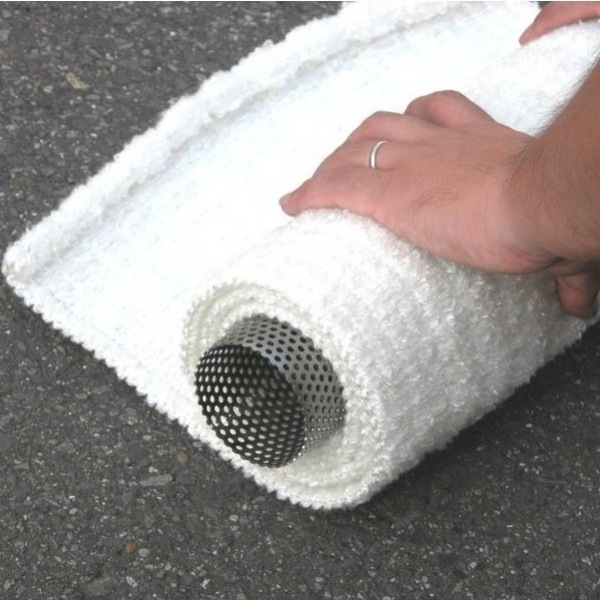
A tubular packing assembly can be fitted around the perforated core, reducing installation time and helping maintain circumferential coverage.
BSTFLEX develops customized packing formats including fiberglass-based assemblies for OEM exhaust production.
A purchase specification should contain more information than simply:
“Fiberglass muffler packing.”
For repeatable production, buyers should consider supplying:
| Specification Item | Why It Matters |
|---|---|
| Fiber material | Determines thermal and mechanical behavior |
| Silencer internal diameter | Defines available packing space |
| Perforated core diameter | Determines required packing thickness |
| Muffler length | Determines fiber quantity |
| Target packing density | Influences acoustic performance |
| Continuous exhaust temperature | Determines material suitability |
| Peak temperature | Identifies short-duration thermal exposure |
| Engine type | Helps evaluate exhaust environment |
| Packing format | Loose fiber, mat, pillow, sock or custom assembly |
| Annual quantity | Determines manufacturing and packaging method |
When these parameters are available, the packing can be engineered around the silencer rather than supplied as a generic bulk fiber.
Manual loose packing creates several variables.
One operator may install more material than another. Distribution around the perforated tube may also vary.
Preformed systems reduce this variability.
A packing sock, bag, pillow, or measured mat can provide:
defined material weight,
more uniform circumferential distribution,
reduced fiber handling,
shorter assembly time,
cleaner production,
improved batch repeatability.
For medium- and high-volume exhaust manufacturing, those manufacturing benefits can be as important as the thermal properties of the fiber itself.
A practical starting point is to identify the dominant failure risk.
Consider fiberglass as the primary acoustic layer.
Consider a stainless steel wool or metallic mesh protection layer before the main fiber packing.
Evaluate ceramic or other elevated-temperature fibers.
Consider materials and packing forms with stronger dimensional stability and controlled retention.
Consider preformed socks, pillows, mats, or custom packing assemblies rather than uncontrolled loose fill.
BSTFLEX manufactures high-temperature thermal and acoustic materials for exhaust systems and can support both replacement packing and OEM silencer production.
Available development options can include:
fiberglass muffler packing,
glass fiber silencer packing,
stainless steel wool packing,
ceramic fiber packing,
basalt-based packing,
loose fiber,
mats,
rolls,
packing bags,
packing pillows,
tubular packing socks,
and customized preformed assemblies.
Sizes, packing weight, fiber combination, retaining construction, and packaging can be developed according to customer drawings, samples, or silencer dimensions.
For applications requiring easier assembly and improved fiber containment, see theFiberglass Muffler Packing Sock with Woven Glass Mesh Bag.
For additional material options, visit theBSTFLEX Muffler Packing category.
There is no universal best material. Fiberglass is widely used because of its acoustic efficiency and weight, stainless steel wool is effective for protecting packing near the perforated core, while ceramic and basalt fibers may be selected where higher temperature capability is required.
Yes. Fiberglass is one of the most common acoustic materials used in absorption-type exhaust silencers because its fibrous structure provides efficient sound absorption while remaining relatively lightweight.
It can be used alone in some designs, but stainless steel wool and fiberglass often perform different functions. Stainless steel wool can protect the inner packing from exhaust erosion, while fiberglass provides the principal acoustic absorption layer.
Packing can escape because of fiber erosion, excessive gas velocity, damaged retaining mesh, incorrect packing density, thermal degradation, or deterioration around the perforated core.
Not necessarily. Excessive compression can reduce the open fiber structure needed for effective acoustic absorption. Packing density should be controlled rather than maximized.
There is no fixed interval for every exhaust system. Replacement frequency depends on exhaust temperature, engine type, riding conditions, packing material, gas velocity, silencer design, and operating hours.
예. OEM 포장은 코어 직경, 쉘 직경, 소음기 길이, 목표 포장 중량, 재질 사양, 온도 요구 사항 및 선호하는 설치 형식에 따라 제공될 수 있습니다.
배기 시스템 설계 시 눈에 보이는 머플러 외피가 가장 많은 관심을 받지만, 그 외피와 천공된 코어 사이에 숨겨진 재질이 소음기의 음향적 특성에 상당한 영향을 미칩니다.
올바르게 설계된머플러 패킹 재료단순히 고온을 견뎌내는 것만으로는 충분하지 않습니다.
섬유 구조, 밀도, 흡음성, 내식성 및 설치 일관성 간의 적절한 관계를 유지해야 합니다.
일반적인 오토바이 및 자동차 소음기의 경우, 유리섬유는 여전히 가장 다용도로 활용 가능한 소재 중 하나입니다. 까다로운 배기 환경에서는 스테인리스 스틸 울, 세라믹 섬유, 현무암 섬유 또는 다층 복합 소재를 사용하여 성능을 향상시킬 수 있습니다.
OEM 배기 시스템 제조업체에게 있어 다음 단계는 단순히 섬유를 선택하는 것만이 아닙니다.
올바른 것을 정의하는 것입니다.배기 머플러 패킹 시스템소음기 형상, 배기 온도, 음향 목표 및 생산 방법에 따라 결정됩니다.
BSTFLEX는 오토바이, 자동차, 경주용 차량, 발전기, 해양 및 산업용 배기 시스템용 머플러 패킹 재료를 제조 및 맞춤 제작할 수 있습니다.
소음기 크기, 작동 온도, 필요한 포장 형식 및 연간 생산량을 BSTFLEX에 알려주시면 적합한 소재 선정 및 샘플 개발을 도와드리겠습니다.

No.10, Chuangxin North Road, Nanshan Park, Ningguo Economic and Technological Development Zone, Ningguo City, Anhui Province, China
전화/Whatsapp : 0086-15856303740
Skype : vanesa-cheng